Search
Table of Contents
- Machine Identity Security: The Definitive Guide
- What Is an SSL Stripping Attack?
-
What Is the TLS Handshake? Process, Steps, and Best Practices
- The Strategic Importance of the TLS Handshake
- How the TLS Handshake Works: Step-by-Step
- TLS 1.2 vs. TLS 1.3: Evolution of Speed and Security
- The Role of Cipher Suites and Digital Certificates
- Identifying and Resolving TLS Handshake Failures
- Advanced Security: TLS Fingerprinting and Threat Detection
- TLS Handshake Best Practices
- TLS Handshake FAQs
- Security Standards and Compliance: SSL/TLS Best Practices
-
What Is the TLS Certificate Lifecycle? Implementation Guide
- TLS Certificate Lifecycle Explained
- The 6 Core Stages of the TLS Certificate Lifecycle
- Why TLS Certificate Lifecycle Matters
- Key Causes of Certificate Failure
- Validation Checks: CRL and OCSP
- How Automation Improves TLS Certificate Lifecycle
- TLS Certificate Lifecycle and Zero Trust
- TLS Certificate Lifecycle FAQs
- What Is PKI? Public Key Infrastructure & Authentication Guide
- What Is a TLS Certificate? How TLS Secures Web Communication
- What Is a Self-Signed Certificate? Risks, Uses & Best Practices
- What Is Certificate Management?
-
What Is Certificate Validation? Guide to Best Practices
- Certificate Validation Explained
- The Role of Certificate Authorities and the Chain of Trust
- The Hierarchy of Trust
- The Sequence of the Validation Process
- Types of Certificate Validation Levels
- Unit 42 Insights: The Risk of Identity Exposure
- Threat Behavior Observations
- Troubleshooting Common Validation Failures
- Certificate Validation FAQs
-
What Is TLS Certificate Renewal? Process, Risks & Automation
- TLS Certificate Renewal: The Shift from Maintenance to Mission-Critical
- Why the 47-Day Mandate Redefines Renewal Strategy
- The Technical Lifecycle of a TLS Renewal
- Critical Risks: The High Cost of Renewal Failure
- Best Practices for Enterprise-Scale Renewal
- Overcoming Common Renewal Challenges
- TLS Certificate Renewal FAQs
- What Is an X.509 Certificate? Definition, Standards, and Role
-
What Is Cert-Manager? Kubernetes Certificate Management Explained
- cert-manager Explained
- Core Components: Issuers and Certificates
- 1. Issuers and ClusterIssuers
- 2. Certificates
- How cert-manager Automates Machine Identity
- Common Compatible Cloud Platforms
- Zero Trust and Kubernetes Security Alignment
- Integrating cert-manager into DevSecOps Workflows
- Benefits for DevSecOps Teams
- cert-manager FAQs
- What Is a TLS Decryption? Methods, Risks & Best Practices
- What Is a Multi-Domain SSL Certificate? SAN & UC Explained
-
TLS/SSL Offloading: Definition & Decision Checklist
- TLS/SSL Offloading Explained
- SSL Termination vs. SSL Bridging
- Key Differences in Workflow
- Unit 42 Perspective: Risks of Uninspected Traffic
- Benefits for Security and Infrastructure Teams
- CISO Decision Checklist: SSL Termination vs. SSL Bridging for Compliance
- Detailed CISO Decision Checklist
- Summary Recommendation for CISOs
- TLS/SSL Offloading FAQs
- What is Code Signing? Benefits, Risks & Implementation
- What Is ACME Protocol?
-
What Is Certificate Pinning? Benefits, Risks & Best Practices
- Certificate Pinning Explained
- How Certificate Pinning Works
- Listiche: Key Stages of a Pinning Failure
- Types of Certificate Pinning
- Listiche: Static vs. Dynamic Pinning
- Why Pinning Is Essential for Zero Trust
- Certificate Pinning vs. Standard SSL/TLS
- Benefits of Certificate Pinning
- Risks and Limitations of Certificate Pinning
- When to Use Certificate Pinning
- When to Avoid Certificate Pinning
- Certificate Pinning Best Practices
- Certificate Pinning and Machine Identity Security
- FAQs
- What Is a TLS/SSL Port? Port 443 and HTTPS Explained
- TLS Certificate Risks: Vulnerabilities and Mitigation Strategies
- What Is a Certificate Authority?
- What Is a Certificate Chain of Trust?
- What Is Workload Identity? Securing Non-Human Identities
- What Is a Non-Human Identity (NHI)? Machine Identity Security Explained
-
What Is a Machine Identity?
- How Do Machine Identities Work?
- Machine Identity Management (MIM) vs. Human IAM
- Architecture Components and Identity Types
- Secrets Management vs. Machine Identity Management
- Lateral Movement and Attacker Workflow
- Cloud Security Implications and CIEM
- Implementation Steps for Machine Identity Security
- Machine Identity FAQs
-
What is SPIFFE? Universal Workload Identity Framework Guide
- SPIFFE Explained: Solving the Workload Identity Problem
- Core Components of the SPIFFE Standard
- The SPIFFE Workload API
- Why Traditional Secret Management Fails in Cloud-Native Environments
- The Problem of "Secret Zero"
- Vulnerabilities of Static Credentials and Long-Lived Tokens
- IP-Based Security vs. Identity-Based Security
- How SPIFFE Implementation Works: The Attestation Process
- The Role of SPIRE as the Reference Implementation
- Critical Use Cases for Enterprise Security
- SPIFFE FAQs
- What is Cloud Workload Security? Protection & Best Practices
What Is ITDR (Identity Threat Detection and Response)?
5 min. read
Table of Contents
Identity Threat Detection and Response (ITDR) is a cybersecurity framework and set of capabilities that protects identity and access infrastructure from attack. ITDR solutions actively monitor, detect, and respond to threats against user accounts, privileged credentials, and identity systems, which attackers abuse to bypass traditional security controls.
Key Points
-
Identity as the control plane: Cloud adoption and remote work dissolved traditional perimeters, making digital identities the primary control plane and a frequent attack target. -
Detection after authentication: ITDR assumes attackers can compromise identities despite preventive access controls and monitors how accounts behave after login. -
Behavioral analytics: ITDR uses artificial intelligence (AI) and machine learning (ML) to detect anomalies in user behavior, such as credential misuse and insider threats. -
Automated response: ITDR enables rapid containment, such as account isolation, access revocation, and step-up authentication, to stop identity threats before they escalate. -
Hybrid coverage and evaluation: Effective ITDR spans on-premises directories, cloud identity providers, software as a service (SaaS) apps, and non-human identities.
ITDR Explained
ITDR is a core layer of any identity security program, focusing on how compromised identities threaten an organization's digital assets. Traditional cybersecurity models centered on network perimeters.
Today, cloud adoption, remote work, and hybrid environments have dissolved these boundaries, elevating identity to the primary control plane. Users access resources from diverse locations and devices, which makes their identities, and the systems that manage them, critical points of vulnerability.
Attackers target identities because compromised credentials offer a direct, legitimate pathway into an organization's systems. Stealing or manipulating a valid identity is often simpler than breaching a hardened network firewall.
Many organizations rely on a patchwork of security solutions that leaves gaps in identity protection. ITDR integrates with identity and access management (IAM) and privileged access management (PAM) systems to create a cohesive defense.
It correlates data from various sources, so anomalous behavior in a cloud application or an on-premises directory triggers alerts and automated responses. Security leaders, security operations center (SOC) analysts, and identity teams all rely on this identity-specific view.
Why is ITDR Important?
Identity remains a major attack path even as attacker tactics shift. In its 2026 Data Breach Investigations Report (DBIR) executive summary, Verizon reports that vulnerability exploitation now leads initial access vectors, at 31%.
Credential abuse, the previous leader, fell to 13% in the same dataset. Even at that share, attackers still enter through valid accounts that preventive controls can miss.
Weak identity hygiene compounds the risk. Verizon found that only 23% of third-party organizations fully remediated missing or improperly secured multifactor authentication (MFA) on their cloud accounts.
For the business, one undetected identity compromise can turn a stolen login into access to sensitive systems and data. ITDR gives security teams a way to spot that misuse after authentication and contain it before it escalates.
How Does ITDR Work?

ITDR follows a continuous detection and response cycle built around identity data.
- Collect identity telemetry: ITDR ingests authentication attempts, access requests, privilege changes, and directory modifications from on-premises and cloud identity systems.
- Baseline behavior: Behavioral analytics establishes normal patterns for each identity, such as login times, locations, device usage, and resource access.
- Detect and score: ITDR flags deviations, like an unusual login from a new country or rapid privilege escalation, and assigns risk scores to prioritize alerts.
- Correlate: ITDR links identity alerts with endpoint, network, and cloud activity to expose multistage attacks such as lateral movement.
- Respond: ITDR triggers automated containment or gives analysts the context to investigate and remediate manually.
Key Components of ITDR
- Continuous identity visibility: Monitors authentication, privilege changes, and directory modifications in Active Directory and Microsoft Entra ID, covering human and non-human identities.
- Behavioral analytics: Uses user and entity behavior analytics (UEBA) and machine learning to baseline normal activity and flag significant deviations.
- Threat intelligence integration: Correlates identity activity with threat intelligence on known attack techniques and indicators of compromise (IOCs) to prioritize threats.
- Identity security posture management (ISPM): Finds misconfigurations, excessive permissions, and shadow IT identities so teams can harden identity systems proactively.
- Response capabilities: Enforces step-up MFA, disables compromised accounts, revokes sessions or tokens, and resets passwords, with context for manual investigation.
- Ecosystem integration: Sends identity alerts to security information and event management (SIEM) platforms and shares context with extended detection and response (XDR) tools.
How to Evaluate an ITDR Platform
Organizations evaluating ITDR solutions should test each platform against their own identity architecture. The criteria below are editorial guidance tied to the threat data in this article.
| Criterion | What to verify | Why it matters |
|---|---|---|
| Identity sources covered | Which sources the platform ingests: Active Directory, Microsoft Entra ID, Okta, and SaaS applications. | Most enterprises run multiple identity systems, and attackers move between on-premises and cloud environments. |
| Behavioral baselining | How the platform builds per-identity baselines and how it adapts to legitimate changes in behavior. | Rule-based detection often misses subtle anomalies such as unusual token use. |
| Identity posture management | Whether it flags misconfigurations, excessive privileges, weak or compromised passwords, and stale accounts. | Attackers exploit Active Directory weaknesses, as the government guidance in the next section details. |
| Correlation with endpoint, network, and cloud data | Whether identity alerts join endpoint, network, and cloud telemetry in a single investigation. | Most intrusions span multiple attack surfaces, so isolated identity alerts miss the full attack path. |
| Automated response | Which actions run automatically (MFA challenge, block, session revocation) and whether policies can run in a test mode first. | Fast containment limits attacker progress, and the fastest intrusions move quickly. |
| Deployment requirements and time to value | Agents, licenses, supported versions, and data onboarding needed before detections go live. | Prerequisites drive time to value, so a proof of concept reveals the real deployment effort. |
| Non-human identity coverage | Whether it monitors service accounts, application programming interface (API) keys, OAuth tokens, and AI agents. | Non-human identities often outnumber human users and receive inconsistent monitoring. |
The research section later in this article supplies the threat data behind these rationales.
ITDR in Hybrid and Multicloud Environments
Most enterprises run several identity systems at once, and attackers move between them. ITDR must cover each layer and correlate activity across all of them.
On-premises Active Directory (AD) remains a primary target. The Cybersecurity and Infrastructure Security Agency (CISA) co-published guidance on Active Directory compromises with the Australian Signals Directorate (ASD) and other partners.
The CISA guide outlines mitigations for the 17 most common techniques adversaries use to compromise AD. Beyond AD, ITDR coverage should extend to three more layers.
- Cloud identity providers: Microsoft Entra ID and Okta authenticate users to cloud resources, so ITDR must monitor their sign-in and policy activity alongside AD.
- SaaS applications: SaaS data appears in a growing share of incidents, so ITDR should ingest SaaS access activity.
- Non-human identities (NHIs): Service accounts, API keys, OAuth tokens, and AI agents often hold broad privileges and long-lived credentials that need monitoring.
ITDR correlates detections across these layers by building a unified identity profile for each user and joining it with cross-domain telemetry. That view lets analysts follow one attacker from an on-premises login to cloud and SaaS activity.
ITDR vs IAM, XDR, SIEM, and EDR
ITDR often overlaps with other cybersecurity functions, but it maintains a distinct focus on identity. The table below compares their roles. These technologies complement one another. IAM prevents unauthorized access; EDR, XDR, and SIEM provide broad detection, and ITDR adds identity-specific depth across all of them.
| Technology | Primary purpose | Focus | How it relates to ITDR |
|---|---|---|---|
| ITDR | Detect and respond to identity-based threats | Authentication flows, directory changes, and identity behavior | Assumes attackers can compromise identities despite IAM and acts as a safety net |
| IAM | Prevent unauthorized access | Who has access to what, enforced through MFA and role-based controls | ITDR catches threats that bypass preventive IAM measures |
| Endpoint detection and response (EDR) | Detect and respond to threats on endpoint devices | Activity on laptops, servers, and workstations | EDR watches devices, while ITDR watches the identities that access them |
| Extended detection and response (XDR) | Unified detection and response across security layers | Correlated telemetry from endpoints, networks, cloud, email, and identity | ITDR acts as a specialized component that adds identity depth to multistage attack detection |
| Security information and event management (SIEM) | Aggregate and analyze log data for compliance and broad threat detection | Logs from nearly all IT and security systems | SIEMs ingest identity logs, and ITDR supplies high-fidelity identity detections for SIEM correlation |
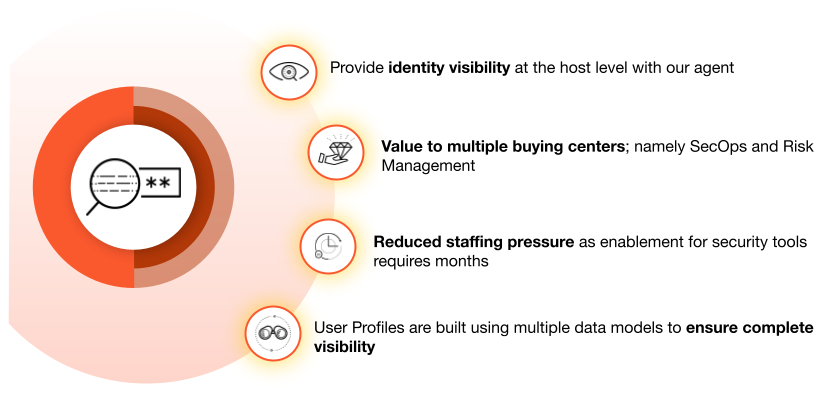
- Earlier detection of credential misuse: Behavioral baselines can surface valid-account abuse that preventive controls miss.
- Reduced dwell time and lateral movement: Identity correlation can help analysts spot attackers moving between systems and contain them sooner.
- Higher-fidelity identity alerts: Identity-specific context can enrich SOC and SIEM workflows so analysts focus on credible threats.
- Identity posture hardening: Continuous posture checks can find misconfigurations, excessive permissions, and stale accounts before attackers exploit them.
- Automated containment: Step-up MFA, account blocking, and session revocation can limit an attacker's window while teams investigate.
No independent source publishes ITDR efficacy benchmarks, such as measured reductions in dwell time or false positives. Organizations should measure mean time to detect (MTTD), mean time to respond (MTTR), and false positive rate in a proof of concept.
What are the Challenges and Tradeoffs of ITDR?
Implementing and maintaining strong ITDR involves common hurdles that teams should plan for.
- Alert fatigue: High alert volumes can hide genuine threats. Intelligent prioritization, automated triage, and risk-based scoring help analysts focus on critical alerts.
- Baseline tuning and false positives: Analytics can flag benign activity as malicious. Baselines need ongoing tuning to reflect normal business operations.
- Data onboarding: Connecting AD, cloud identity providers, and SaaS apps takes planning, and scale matters as identity infrastructure grows more complex.
- Overlap with IAM and XDR: ITDR capabilities can overlap with existing tools. Teams should define which platform owns each detection and response action.
- Deployment prerequisites: Some platforms require agents on Domain Controllers, minimum agent versions, or add-on licenses before detections and enforcement go live.
- Skills shortage: Advanced identity analytics take specialized expertise. Managed ITDR services or platforms with built-in intelligence can help close the talent gap.
- Non-human identity coverage gaps: Service accounts, API keys, and tokens behave differently from human users. Organizations should confirm how deeply each tool monitors them.
Best Practices for ITDR
Successful ITDR requires strategic planning, the right tooling, and ongoing operational commitment. These practices balance security effectiveness with user productivity.
- Assess risk first: Start with a cybersecurity risk assessment that pinpoints critical assets, high-value accounts, and possible attack routes.
- Harden Active Directory posture: Apply the Active Directory hardening guidance referenced above to fix misconfigurations, excessive privileges, and weak passwords.
- Integrate identity sources: Feed ITDR data from identity providers, network security tools, and endpoint protection to achieve broad threat visibility.
- Set policies and response playbooks: Define acceptable use, access protocols, and incident response steps so automation can separate regular activity from threats.
- Tune with risk scoring: Prioritize alerts by potential impact and attack likelihood so analysts focus on critical threats.
- Extend Zero Trust with continuous identity verification: Integrate ITDR with Zero Trust architecture to eliminate implicit trust and continuously assess identity and device risk.
- Measure detection and response metrics: Track detection rates, response times, and false positive rates to improve security operations over time.
Unit 42 Research: How Attackers Exploit Identity
The 2026 Unit 42 Global Incident Response Report found that identity weaknesses played a material role in nearly 90% of Unit 42 investigations. The report draws on more than 750 cases handled between October 2024 and September 2025.
The caseload skews toward larger organizations with more mature security postures. Its other identity findings add detail on how attacks unfold.
- Initial access: Identity-based techniques drove 65% of initial access: social engineering (33%), credential misuse and brute force (21%), and identity policy and insider risk (11%).
- Exfiltration speed: The fastest quartile of intrusions reached exfiltration in 72 minutes in 2025, while the median time to exfiltration was two days.
- Multiple attack surfaces: Activity across multiple attack surfaces appeared in 87% of intrusions.
- Cloud permissions: In a separate analysis of more than 680,000 cloud identities, 99% of cloud users, roles, and services had excessive permissions.
- SaaS exposure: SaaS application data was relevant to 23% of cases in 2025, up from 6% in 2022.
- Non-human identities: NHIs often outnumber human users and are frequently over-privileged and inconsistently monitored.
These figures differ from Verizon's DBIR because the methodologies differ. Unit 42 analyzes its own incident response caseload, while Verizon analyzes a multi-contributor breach dataset.
Common Identity-Based Threats
- Credential stuffing: Attackers test large volumes of reused username-password combinations from previous breaches against target systems.
- Phishing: Campaigns use social engineering techniques to steal credentials or trick users into installing malware.
- Privilege escalation: Attackers with initial access try to obtain higher-level permissions within target systems.
- Account takeover: Attackers gain control of legitimate accounts through various means, including credential theft and session hijacking.
- Insider threats: Current or former employees abuse authorized access to steal data, sabotage systems, commit fraud, or disclose information without authorization.
ITDR FAQs
Endpoint detection and response (EDR) detects and responds to threats on devices such as laptops and servers. Identity threat detection and response (ITDR) detects and responds to the misuse of accounts, credentials, and identity systems, so the two complement each other.
Yes, identity threat detection and response (ITDR) platforms can monitor on-premises Active Directory alongside cloud identity providers such as Microsoft Entra ID and Okta. Coverage varies by platform, so organizations should verify support for each identity source, SaaS application, and non-human identity type.
Identity threat detection and response (ITDR) implementation time depends on prerequisites such as licensing, agents on Domain Controllers, and connecting each identity source. Timelines vary by environment, so organizations should measure time to value during a proof of concept.
Identity threat detection and response (ITDR) helps detect credential theft, account takeover, privilege escalation, insider threats, compromised service accounts, and lateral movement using stolen credentials. It also identifies suspicious login patterns, unusual access behavior, and attempts to exploit identity systems or directories.
Yes, identity threat detection and response (ITDR) solutions send identity alerts to security information and event management (SIEM) and extended detection and response (XDR) platforms. This integration enriches existing security data with identity context and supports centralized correlation and automated response workflows.


